
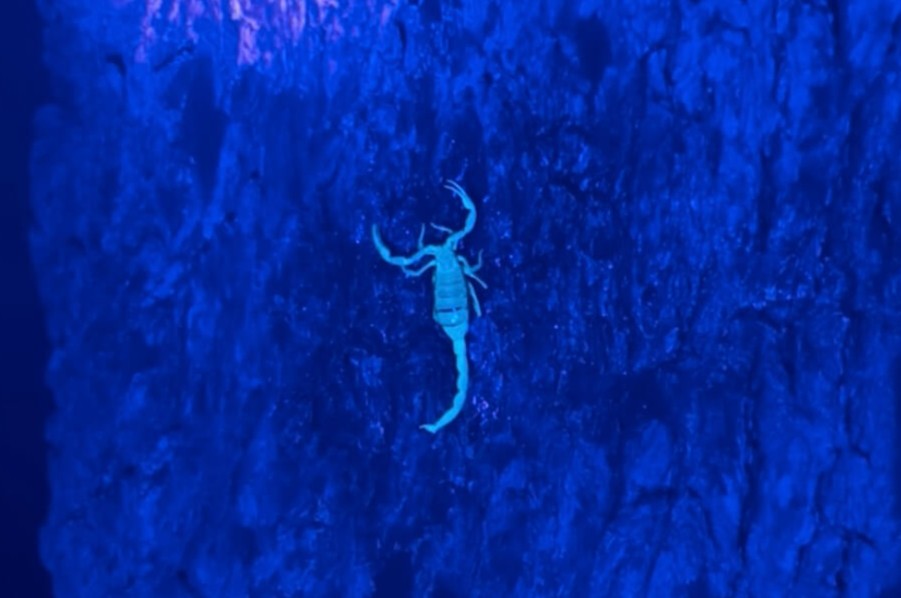
A Note from the Owner: With over 30 years of experience protecting homes in Canyon Lake and the Texas Hill Country, I’ve spent countless nights with a blacklight in hand, studying how scorpions actually move and survive in our unique environment. This isn’t just a job for me—it’s 12 years of professional chemistry training and three decades of “boots on the ground” expertise combined to protect your home. While the big corporate guys follow a generic manual, I use a specialized, technical approach to solve the problems they miss.
The Security Camera Secret
One of my customers recently shared something that would keep most people awake at night. She has security cameras tucked into the corners of her eaves and soffits. Most of the year, they just catch the occasional bird or breeze. But when “Scorpion Season” hits in the Hill Country, those cameras tell a different story. She sees them—scorpions patrolling the very top of her house, inches away from the attic vents.
If you are only looking at your baseboards, you are missing half the battle.
The “High-Altitude” Scorpion In my 30 years in Canyon Lake, I’ve spent a lot of nights hunting these pests with a blacklight. While many are down in the rock piles or wood heaps, I consistently find them 5, 10, or even 15 feet up in our native Live Oaks.
Scorpions are incredible climbers. They use the rough, deeply furrowed bark of an Oak tree as a private highway. If you have a majestic Live Oak with branches reaching toward your roofline, you aren’t just looking at shade—you’re looking at a bridge.
The Barometric Trigger I’ve noticed a pattern during my night hunts: their activity levels aren’t random. Sometimes, when the barometric pressure shifts or a storm is brewing, they become hyper-active. I’ve seen them moving with incredible speed across limestone rocks and tree trunks. When they are in “sprint mode,” a standard hardware store spray isn’t going to cut it. You need professional chemistry that sticks to their legs and stays effective long after the application.
Looking for more on how the Hill Country’s top hunters operate? Check out my guide to Canyon Lake Spiders.
The 30-Year Audit Strategy
When I pull up to a house, I’m not just looking for where to spray the tank; I’m conducting a structural audit. Here is how we handle the “Arboreal” threat:
The Bridge Inspection: We identify tree limbs touching or overhanging the shingles. These are the primary bypass points for your ground perimeter.
Trunk Defense: I typically spray the base of trees that are in close proximity to the house. This disrupts the “highway” for both scorpions and ants.
Eave & Soffit Protection: Since we know they are up there (thanks to my customer’s cameras!), we treat the entry points that other companies ignore—soffit vents and roof junctions.
If you’re ready to move past basic DIY and want a professional Scorpion Treatment that covers your home from the ground to the eaves, I’m here to help.
The Veteran Difference
Pest control in the Hill Country isn’t just about a “bug man” showing up and walking in circles. It’s about understanding the biology of a predator that has survived for millions of years. If your current service only focuses on the grass, you’re leaving the “high road” wide open.
Don’t wait until you see them on your cameras or near your crib. If you’re in Canyon Lake, Spring Branch, or the surrounding area, call 830-899-5400 for a veteran’s audit of your property.
