Backed by a 30-year family legacy in Alternative Pest Control and my own 12 years of boots-on-the-ground field experience, I’ve combined my local knowledge with the wisdom of 45-year industry veterans to bring you the most effective, field-tested wasp strategies in the Texas Hill Country.
If you live in Canyon Lake or Spring Branch, you’ve probably seen every DIY “hack” in the book—from hanging brown paper bags to “essential oil” repellents. After 12 years in the field and 30 years of family history in the business, I’m going to give you the honest truth: most of those “tricks” don’t work.
Here is the real-world guide to managing wasps and hornets without the fluff.
The “Fake Nest” Myth
I’ve seen it all, including a customer who made a “wasp decoy” out of a paper bag. The result? The black and yellow paper wasps actually used it as a shelter and built their nest right behind it.
The truth is, there are no permanent repellents for flying insects. Most “preventions” are temporary at best. If you want real control, you have to understand the biology of the bug, not just hang a bag and hope for the best.
The “Hidden” Danger: Soffits, Gaps, and Red Wasps
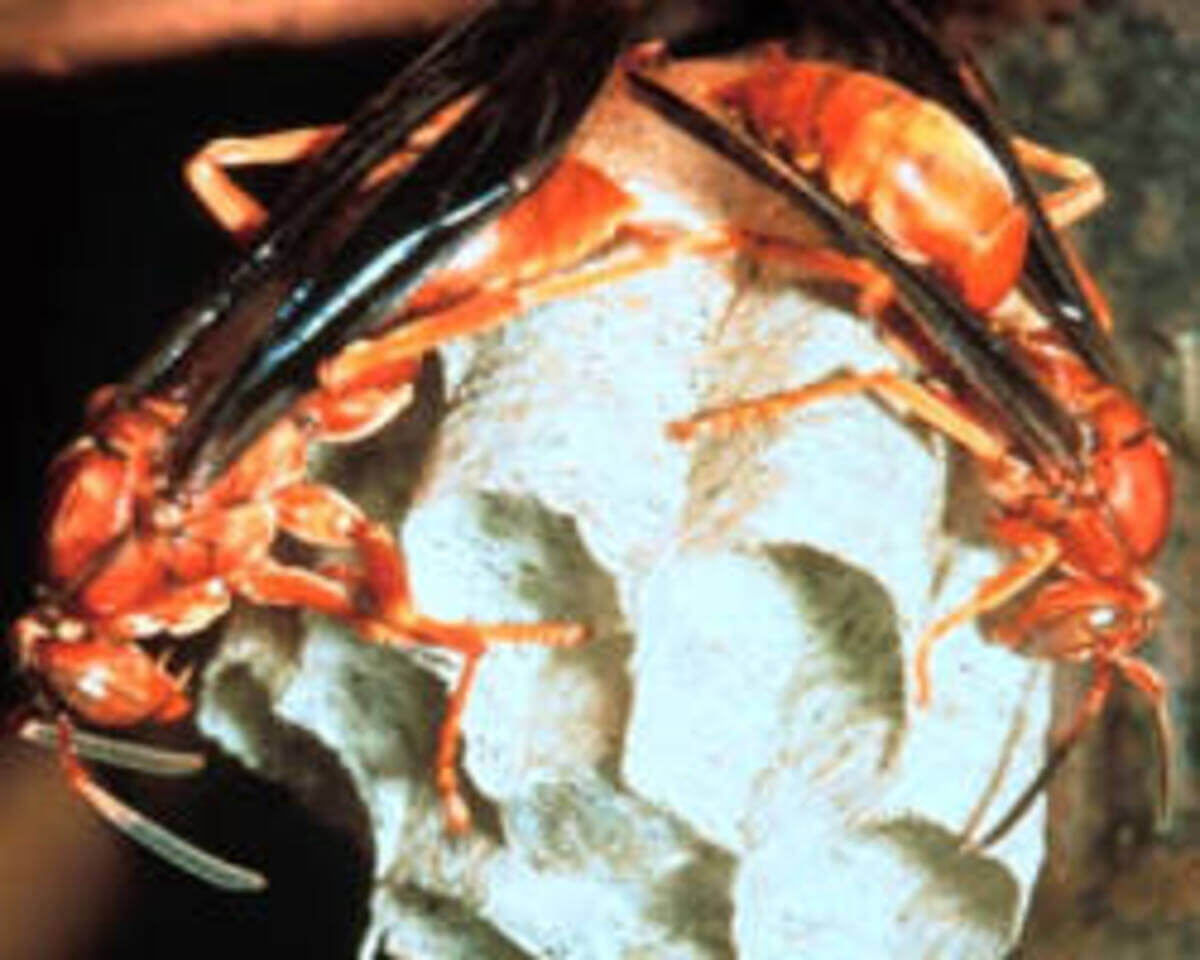
The biggest headache in the Hill Country is the Red Wasp. These guys are notorious for flying into tiny gaps in your soffits or trim.
The Problem: They build nests in voids we can’t see or reach.
The Cycle: Because they fly directly into the hole without touching the exterior surface, traditional residual sprays often fail.
The Fix: While dusts can help, the real solution is winter sealing. Once the season ends, using foam, caulk, or mesh to seal those entry points is the only way to break the year-after-year hatching cycle.
Understanding the “Big Three” in Our Area
Most people call every black and yellow flying insect a “Yellowjacket,” but accuracy matters for treatment:
Paper Wasps (Black & Yellow): Often confused with yellowjackets. They aren’t as aggressive unless you’re messing with their nest.
Yellowjackets (German & Southern): These are our primary ground-nesters. They are aggressive if the nest is disturbed (like by a lawnmower).
The 20-Foot Rule: If you have a nest 20 feet up on your roofline, leave it alone. Wasps aren’t aggressive unless they feel threatened. If you aren’t up there on a ladder, they’ll do their thing while you do yours.
How to Coexist (and When to Call)
Wasps are part of our ecosystem, but they don’t have to be your roommates. My advice? Stay calm. Don’t swat, scream, or spray them with water. Unless they are guarding a nest right next to your door, they won’t bother you.
When you do need a pro, here is the difference: The “big guys” do a 10-minute “blow and go” service, dusting eaves and moving on. I take a different approach. I spend the time to treat the interior, use targeted granules, and use high-reach equipment to knock down the nests that actually pose a threat to your family.
The Long-Term Plan
Quarterly or Bi-Monthly service is the most effective way to keep populations suppressed. By maintaining a consistent perimeter and hitting the hotspots during our regular visits, we keep the “wasp pressure” low so you can enjoy your yard in peace.
Tired of the “hit or miss” DIY sprays and wasp stings? Call for an Expert Hill Country Property Evaluation.
