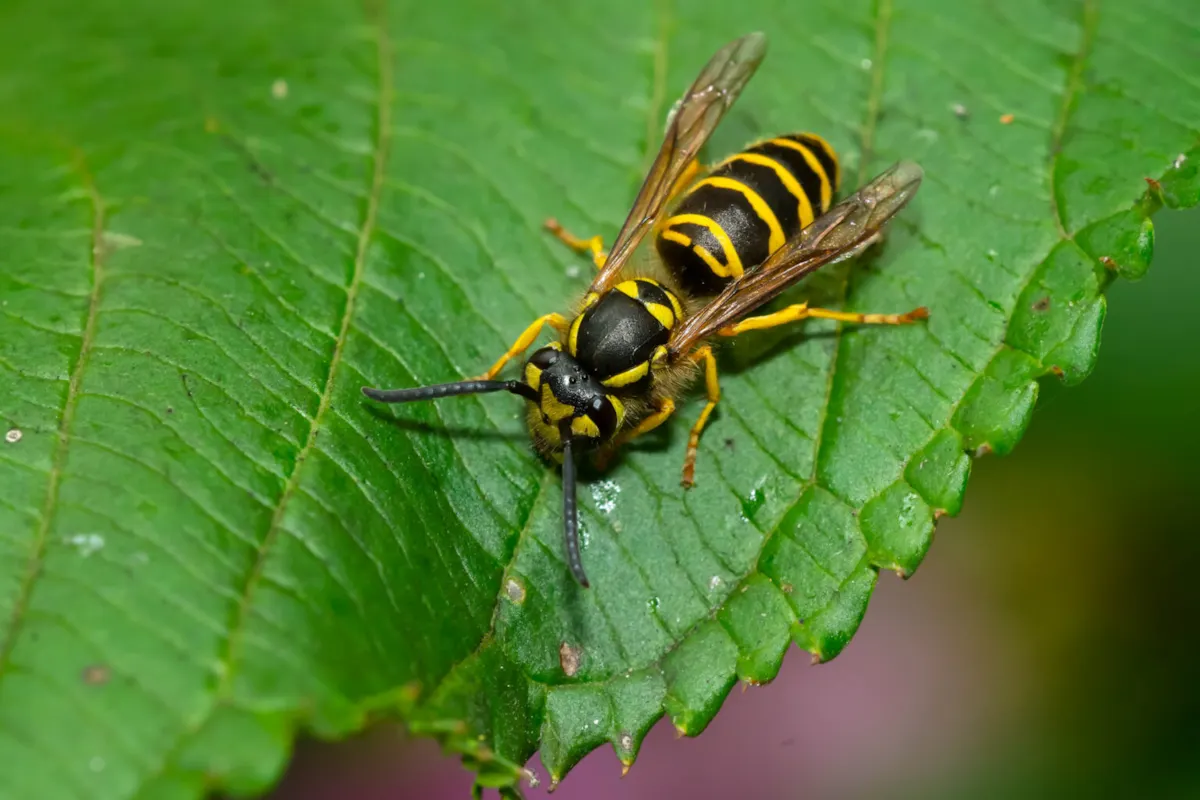
Ground hornets, also known as yellowjackets of numerous species, are an aggressive wasp known for their multiple and painful stings. Here in the Hill Country, they are typically more active during the autumn months and begin foraging around October and November. Here are some fun facts and tips to keep yourself safe this fall.
Ground hornets—most commonly German Yellowjackets here in the Canyon Lake and Spring Branch area—are some of the most aggressive pests we encounter. Unlike many beneficial insects, these wasps are known for their territorial nature and painful, multiple stings. As a local “bugman,” I’ve treated countless nests, and I want to help you stay safe during the peak autumn foraging months of October and November.
1. Appearance & Identification
Yellowjackets are often mistaken for honey bees, but they are smooth and about 1/2″ long with distinct geometric yellow and black patterns. One unique fact is their ability to recognize individual faces! While Honey Bees (see our Honey Bee Facts guide) have a hovering flight pattern, yellowjackets fly with a direct, “on a mission” intensity.
2. The “Giant” Imposter: Cicada Killers
You may also see massive wasps burrowing in sandy soil. These are often Cicada Killers. While they look terrifying, they are solitary and rarely sting unless stepped on. Unlike the social yellowjacket, they don’t have a “hive mind” to attack you in a swarm.
3. Common Nesting Locations
I’ve found nests in everything from water meter boxes and retaining walls to railroad ties and stacked rocks. I once treated a nest at a Canyon Lake golf course that was built in tall decorative grasses! I even had to help a septic tank installer who accidentally dug a nest out with a backhoe. If you see a small hole with constant “in and out” traffic, that is a clear sign of a yellowjacket colony.
4. What Attracts Them to Your Property?
Yellowjackets love sugar and proteins. This is why you see them around gas station trash cans or outdoor cookouts. Bright colors and floral patterns also attract them. If you’re hosting an outdoor event, wearing neutral colors can actually help you stay under their radar.
5. Prevention & Safety Tips
You can’t always prevent yellowjackets from moving in, but you can be aware. Look for activity in weep holes or stacked rocks before you start yard work. Loud equipment like weed eaters and chainsaws can trigger an attack pheromone, causing the entire colony to pile out.
If you find a nest: Walk away slowly. Do not flail your arms.
If you are attacked: Run in a straight line toward shelter or a vehicle.
First Aid: Use a credit card to scrape away any stingers. An ice pack and antihistamines can help with the swelling.
Expert Ground Hornet Removal
Most homeowners find these nests the hard way—by getting stung. Store-bought sprays often fail to reach the heart of a ground nest and can just make the colony more aggressive. At Alternative Pest Control, we have the specialized equipment to eliminate these dangerous nests safely. We typically make 2-3 follow-up trips to ensure your Canyon Lake home is 100% clear. If you have non-ground wasps and need more information, check out our Wasp page.
