
Experience matters when dealing with Hill Country spiders. Since 1996, Alternative Pest Control has been a fixture in Canyon Lake, and I bring 12 years of hands-on expertise to every property. I’ve spent over a decade learning exactly which products stand up to the Texas heat and which natural behaviors—like lighting choices—make the biggest difference in keeping spiders away.
Identifying Dangerous Texas Spiders
As a resident of the Texas Hill Country, you should be familiar with the basic variety of potentially dangerous pests native to the area. While most spiders play an important role in our ecosystem by eating other insects, these are the four you need to watch for in the Canyon Lake and Bulverde area:
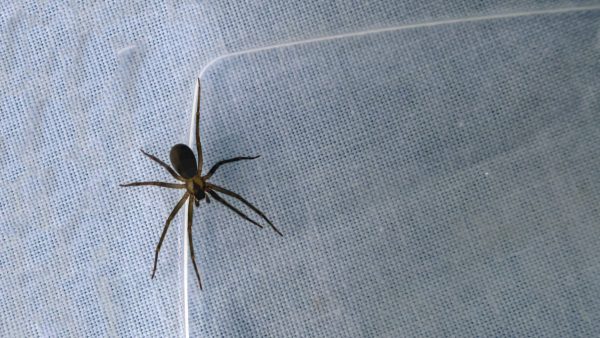
Brown Recluse: These are light tan or brown and identified by a violin-shaped marking on the head and thorax. They prefer dark, undisturbed areas like closets, attics, basements, and piles of clothes. Their venom can cause necrosis (tissue death) in severe cases.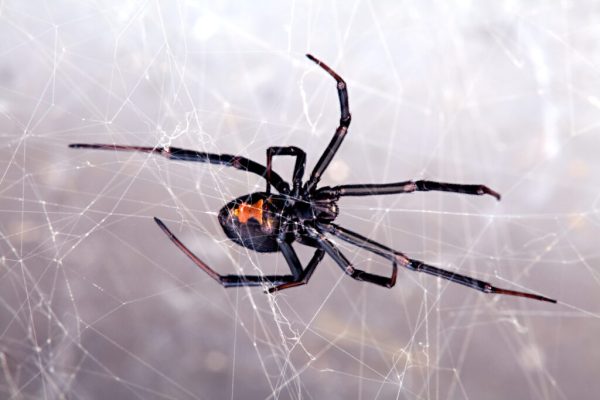
Black Widow: These are shiny black with a red hourglass marking on the underside of the abdomen. In my years as a professional pest control operator, I have actually only seen two live black widows in the field—they stay very hidden in garages, wood piles, and water main boxes.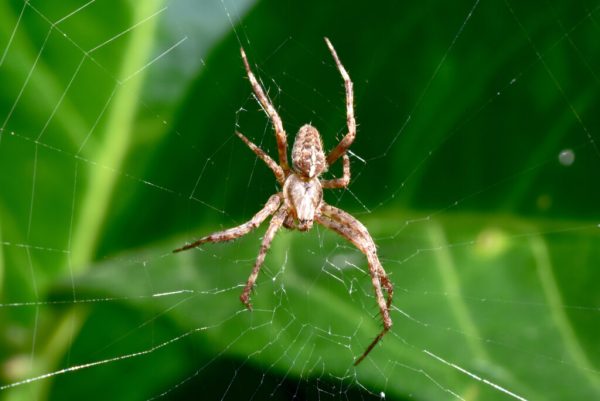
Wolf Spider: These are active hunters that do not spin webs to catch food. They are large, hairy, and brown or gray. While their bite can cause an allergic reaction, they are generally not dangerous to humans.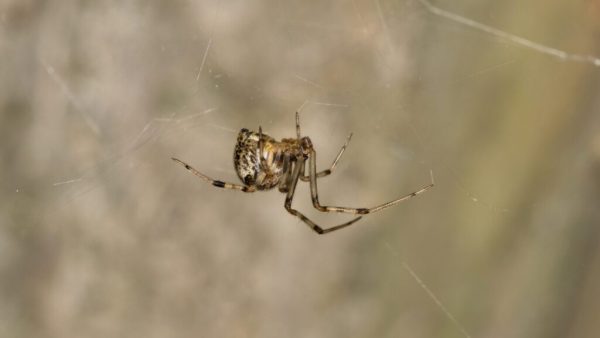
Brown Widow: Similar in size to the black widow but tan-colored with banded markings on the legs. They have distinct spiky egg sacs and their natural predators are mud daubers.
The Professional Reality of Spider Control
After many years in pest control around Canyon Lake, Bulverde, and Spring Branch, I can say that we achieve about an 80% reduction in spider populations with just a general pest control treatment alone. You don’t always need a massive exclusion project if the foundational service is maintained.
I use a high-quality residual concentrate designed specifically for spiders, combined with the proper use of dust products in wall voids and attics. When you pair this professional barrier with homeowner housekeeping, spiders truly become a non-issue.
Inspections & Monitoring
A proper inspection is needed to determine the species and numbers of active spiders. I check the corners of closets, around light fixtures, under cabinets, and behind boxes in garages. I tend to find the most spiders around light fixtures that stay on all night—where there is plentiful prey for them to catch.
Natural Control Methods
Amber Lighting: The most effective measure I have found at my own house is switching to amber LED light bulbs. Standard lights attract the flying insects that spiders eat. Switching to amber or yellow bulbs makes a tremendous difference.
De-Cluttering: Removing clutter and keeping storage items in tightly sealed containers takes away the dark habitats spiders enjoy.
Physical Barriers: Filling in weep holes with mesh products like copper or stainless steel, and sealing plumbing/AC pipe penetrations, helps eliminate entry points.
Sanitation: Regularly removing and brushing away webs irritates spiders and encourages them to move to a different nesting area.
Natural Predators
Spiders are prey to lizards, birds, toads, and frogs. While it’s difficult to rely solely on natural predators, creating a habitat hospitable for these animals will help decrease spider populations slightly. (The frogs will also help you with mosquito control!)
While our general treatments provide an 80% reduction in spiders, a consistent monthly barrier is the only way to keep the most stubborn Hill Country pests—like scorpions—from testing your foundation.
